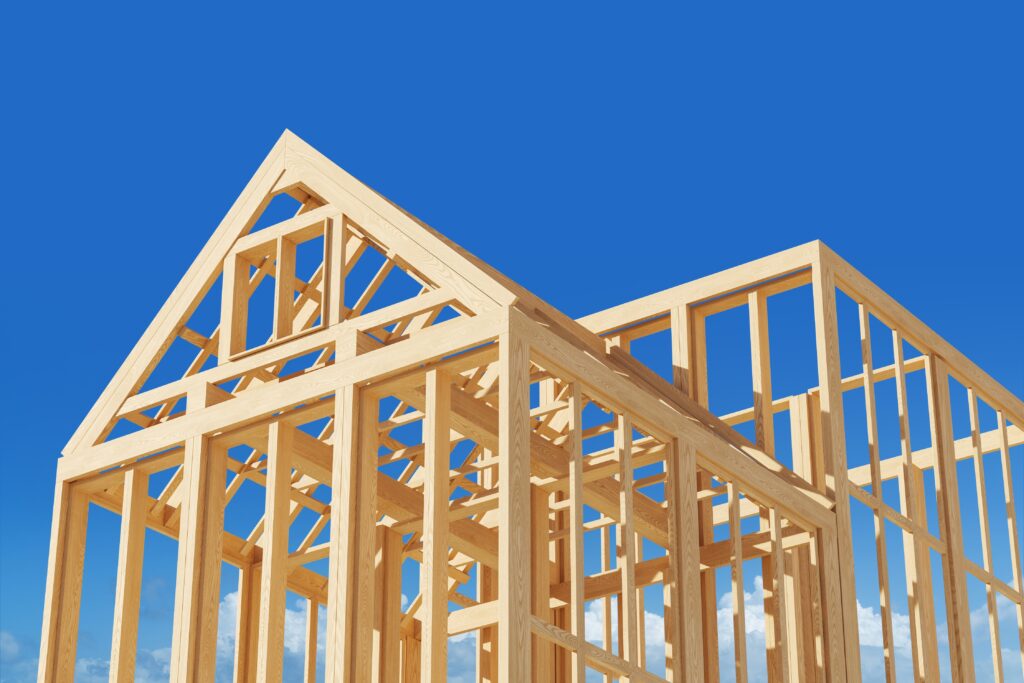
Building a home from the ground up usually requires more than just a standard mortgage. That’s where a construction loan comes in. These loans are designed specifically for people who are building a new home, planning a custom design, or tackling big remodeling projects that need funding as the work happens.
If you’ve never taken one out before, understanding how construction loans work can feel a little confusing. Unlike a traditional mortgage, a construction loan mortgage is short-term, often interest-only, and releases money in stages as your builder completes each phase of the project. In other words, you’re not handed a big lump sum.You’re given exactly what’s needed as the home goes up.
Once you understand the basics, construction loans are a powerful tool that make it possible to build (or rebuild) the home you really want.
What Is a Construction Loan?
Definition and Basic Features
A construction loan is a short-term loan that helps finance the cost of building a new home or majorly renovating an existing one. Instead of getting one large lump sum like you would with a traditional mortgage, a construction loan gives you money in pieces as each stage of the project is completed.
Because lenders take on more risk with unfinished construction, these loans typically come with slightly higher interest rates. They’re also meant to be temporary, usually lasting 6–18 months, and many require interest-only payments during the building phase. Once the home is finished, you’ll either refinance into a standard mortgage or roll the loan into a permanent one, depending on the type of construction loan you choose.
Who Construction Loans Are Right For
A construction loan is a great fit if you’re dreaming of building a custom home from scratch, whether you already own the land or plan to buy a lot as part of the project. It also works well for homeowners who want to take on major renovations, big additions, or even full tear-down-and-rebuild projects.
These loans can work for both owner-builders and those hiring a licensed contractor, but there’s a catch: most lenders strongly prefer (and sometimes require) you to work with a licensed, experienced builder. If you want to take the DIY route and act as your own general contractor, you’ll need to prove you have the skills, experience, and plan to actually pull it off. For most people, partnering with a pro makes the loan process a lot smoother.
Types of Construction Loans
Construction-to-Permanent Loans
A construction-to-permanent loan, often called a “one-time close” loan, is exactly what it sounds like. You go through one closing at the start, the loan funds the construction, and once the home is finished it automatically converts into a standard long-term mortgage. No second closing, no extra fees, no refinancing later.
The big perk? Convenience. You lock in your long-term financing upfront, which can be a huge relief if you’re worried about interest rates rising during your build. You also only have to deal with one set of closing costs. On the downside, you may need to meet stricter requirements from day one since the lender is committing to both parts of the loan. But if you want everything bundled neatly into a single package, this option is hard to beat.
Stand-Alone (Construction-Only) Loans
A stand-alone, or construction-only loan, acts as a short-term loan just for the building phase. Once construction wraps up, you’ll need to refinance into a separate permanent mortgage. That means two closings and two sets of fees, but also more flexibility.
This option is a good fit if you want to shop around for your long-term mortgage later, expect your financial situation to improve by the time construction is done, or simply want more control over each step of financing. It can also help if you’re building a home before selling your current one since you’re not tying yourself to a specific long-term loan right away.
Renovation and Remodeling Construction Loans
Renovation construction loans are perfect if you’re not building from scratch but still planning something major, such as gut renovations, second-story additions, or structural repairs. Instead of using a standard cash-out refinance or a HELOC, a renovation loan lets you borrow based on the after-improved value of your home. That usually means you can access more money for bigger projects.
These loans roll construction costs and your mortgage into one package, which makes budgeting simpler. They can also be easier to qualify for than juggling multiple loans. If you’re planning a major makeover rather than a full new build, this type of loan might be the smarter (and more streamlined) choice.
Government-Backed Construction Loan Options
There are also government-backed construction loans designed to help more buyers get into new builds. FHA construction loans, for example, offer lower down payment requirements and more flexible credit standards, which is great if you don’t fit the mold of a traditional borrower. VA construction loans are available to eligible veterans and active-duty service members and can offer incredible benefits, including no down payment. In some rural areas, USDA construction loans may also be an option.
These programs typically involve extra steps and paperwork, but the trade-off is big savings and easier qualification. If you meet the requirements, a government-backed construction loan can make the path to building a home much more affordable.
How Construction Loans Work Step-by-Step
Pre-Approval and Budgeting
Before anything else, you’ll need to get pre-approved for a construction loan. This step works a lot like pre-approval for a regular mortgage. You’ll share your income, credit history, assets, debts, and overall financial picture so the lender can figure out how much they’re willing to lend. But because construction loans involve more moving parts, expect a few extra questions and documentation requests.
This is also where your budget becomes really important. Lenders want to know your project is financially realistic, so you’ll need solid cost estimates, detailed plans, and a contingency cushion (usually 5–10%) to cover surprises. Construction almost always comes with a few unexpected twists, so having a bit of wiggle room keeps your project and your loan on track.
Choosing a Builder and Submitting Plans
Next up: selecting your builder. Most lenders require you to hire a licensed and approved contractor. They want proof that the builder has experience, is insured, and can actually deliver the home you’re planning.
Once your builder is lined up, the lender will ask for detailed construction plans and specs. That includes blueprints, materials, timelines, and a full cost breakdown. This lets the lender evaluate whether the project is feasible and helps them structure your draw schedule later on. Think of this stage as your project’s game plan. It sets expectations for everyone involved.
The Draw Schedule and Inspections
With construction loans, you don’t get all the money upfront. Instead, the lender releases funds in chunks called “draws” as different parts of the build are completed. Each lender may structure draws a little differently, but the idea is the same: you only receive money for work that’s already been done.
Before releasing each draw, the lender usually sends an inspector to the site to verify progress. This isn’t to critique your style choices. It’s simply to confirm that the builder completed the work tied to that phase. It protects both you and the lender and helps keep the project moving smoothly.
Interest-Only Payments During Construction
While your home is being built, most construction loans require interest-only payments. That means you’re only paying interest on the amount that’s been drawn so far, not the entire loan amount. As a result, your payments start small and increase gradually as construction moves forward and more funds are released.
This setup helps reduce the financial pressure during the build phase, especially if you’re also paying rent or a mortgage on your current home.
Converting to a Permanent Mortgage (If Applicable)
Once construction is complete, a final inspection takes place, and the city or county issues a certificate of occupancy, basically the official thumbs-up that the home is safe to live in.
What happens next depends on the type of construction loan you chose:
- Construction-to-permanent loans automatically convert into your long-term mortgage. Your payment structure switches from interest-only to your regular principal-and-interest mortgage payment.
- Construction-only loans require you to refinance into a separate permanent mortgage. That means going through another approval process and paying closing costs a second time, but it also gives you the chance to shop for better long-term rates or terms.
Either way, once you hit this stage, the building part is behind you.
Construction Loan Requirements and Eligibility
Credit Score and Income Requirements
Because construction loans come with more risk for lenders, the financial requirements tend to be a bit stricter than with a traditional mortgage. Most lenders look for a solid credit score, typically 680 or higher, though some may want to see 700+ for larger or more complex builds. A strong credit score shows you’ve managed debt responsibly, which helps reassure the lender that you’ll handle the unpredictable nature of a construction project.
Along with credit, lenders pay close attention to your income and debt-to-income (DTI) ratio. They want to see stable, reliable income that comfortably covers the interest-only construction payments plus any housing costs you’re already carrying. A DTI of 45% or lower is usually the target, though the exact benchmark can vary by lender and loan type. Bottom line: the more predictable your financial picture looks, the smoother your approval process will be.
Down Payment for Construction Loans
Here’s the part that catches many people off guard: construction loans often require a bigger down payment than a standard mortgage. Most lenders expect anywhere from 10% to 20% down, and some may ask for even more depending on the project scope or your financial profile.
The good news is that down payment rules can vary based on the type of construction loan you choose. For example:
- Conventional construction loans usually require the highest down payments—typically the full 20%.
- FHA construction loans may allow lower down payments (sometimes as low as 3.5%) but come with additional guidelines and mortgage insurance requirements.
- VA construction loans can offer incredible flexibility, including 0% down in some cases, though you must meet VA eligibility requirements, and not all lenders offer this option.
So while construction loans usually require more upfront cash, there are loan programs out there that can make things a bit easier depending on your situation.
Builder and Project Requirements
Lenders aren’t just approving you, they’re also approving the project itself. That means your builder and your construction plans have to meet certain guidelines too.
Most lenders require you to work with a licensed, insured, and experienced builder or general contractor. They want someone who’s done this before, not someone who watched a few YouTube videos and is “pretty sure they can figure it out.” A qualified builder reduces the risk of delays, mistakes, and cost overruns.
Your project also needs to fit within the lender’s guidelines. That includes:
- Acceptable property types (single-family homes, modular builds, major renovations, etc.)
- Approved locations (rural areas may need USDA or specialized lenders)
- A detailed construction contract outlining the work to be done
- A full timeline showing how long each stage will take
- A clear cost breakdown so the lender knows how funds will be used
The more organized and professional your plans are, the better your chances of getting approved. Think of it as showing the lender that your project is a well-planned, realistic build with a strong team behind it.
Construction Loan Rates, Fees, and Costs
Construction Loan Interest Rates
Construction loan interest rates tend to run a bit higher than the rates you’d see on a traditional 30-year mortgage. Lenders take on more risk with construction financing. Unlike a regular home, your new place doesn’t exist yet, and the final value depends on the builder, the materials, the timeline, and about a hundred little variables that can change along the way.
Your exact rate depends on a few key factors:
- Your credit profile: Strong credit usually earns better terms.
- Loan type: Construction-to-permanent loans sometimes come with slightly lower rates than standalone construction loans.
- Project details: A simple, straightforward build in a stable market is viewed as less risky than a custom, complex design or a project in a remote location.
- Your builder’s experience: Lenders love a reputable, well-established builder because it lowers the chance of delays or complications.
So while construction loan rates might feel a bit higher at first glance, remember that they’re usually temporary. Once the home is finished (and if you have a construction-to-permanent loan), you’ll transition into your long-term mortgage at a more traditional rate.
Closing Costs and Fees
Because construction loans are more complex, the closing costs tend to be higher as well. You’re not just paying for a mortgage. You’re also paying for a loan that needs extra oversight and documentation throughout the entire build.
Common construction loan fees include:
- Appraisal fees, often higher because the appraiser evaluates both the land and the proposed construction plans.
- Inspection fees for each draw release during construction.
- Title fees to verify ownership and coverage during the building phase.
- Underwriting and processing fees for the added paperwork and risk assessment.
- Builder approval fees, where the lender reviews your contractor’s credentials and project history.
Depending on the lender and the project, these fees can add up quickly. It’s not unusual to see closing costs of 3% to 5% of the total loan amount. Still, the right lender will be transparent about every cost upfront.
How to Compare Construction Loan Offers
Comparing construction loan offers isn’t as simple as looking at the interest rate. There are several moving parts, and each lender structures their construction loans a little differently.
Here’s what to compare:
- Interest rate: A key factor, but not the only one.
- APR: Gives you a fuller picture of the cost when fees are included.
- Closing costs and lender fees: Some lenders charge more for inspections, draw management, and builder reviews.
- Draw terms: How many draws are allowed, how fast they release funds, and whether they require upfront or post-completion inspections.
- Conversion terms: For construction-to-permanent loans, what rate will your mortgage convert to, and are there additional fees?
- Builder approval requirements: Stricter guidelines can mean more work upfront.
One more thing to consider: lender experience. Construction loans are detailed, time-sensitive, and communication-heavy. A lender who regularly handles construction financing can save you headaches, delays, and miscommunications. A lender who rarely does construction loans? They might slow down your entire project.
Pros and Cons of Construction Loans
Advantages
One of the biggest perks of a construction loan is the freedom to build exactly what you want. Instead of trying to make an existing home fit your lifestyle, you get to customize everything, from the floor plan and finishes to the little details that make a space truly yours. Whether you’re dreaming of an open-concept layout, a giant kitchen island, or a home office that actually feels productive, a construction loan gives you the flexibility to create it.
Another major advantage is the potential equity gain. If the finished home ends up being worth more than the total cost of construction, you’ve built instant equity before even moving in. That’s a huge financial win and one reason many homeowners choose to build rather than buy.
Construction loans also come in several flavors, so you can pick what actually fits your project. Whether you’re building a custom home, tackling a major remodel, or planning a tear-down and rebuild, there’s a loan structure designed for your needs.
Drawbacks and Risks
As great as construction loans can be, they’re not the easiest type of financing to navigate. Expect more paperwork, more documentation, and more lender oversight compared to a standard mortgage. Because lenders are financing something that doesn’t exist yet, they want to keep a closer eye on your builder, your budget, and your timeline.
In addition, construction loans often come with higher upfront costs. Down payments tend to be steeper, closing costs are higher, and there’s always the possibility of budget overruns once construction begins. Even with a solid contingency fund, unexpected issues can pop up: material price increases, supply delays, or discovering something during site prep that requires extra work.
Then there’s the timeline. Construction projects rarely run exactly as planned. Weather delays, contractor schedules, inspections, and change orders can all add weeks (or months) to your project. And since your construction loan is tied to your timeline, delays can sometimes mean extending the loan term or adjusting your financing plans.
Overall, construction loans give you the chance to build your dream home, but they require patience, organization, and a solid team to keep everything on track.
Construction Loan vs. Traditional Mortgage
Key Differences at a Glance
Construction loans and traditional mortgages work very differently, and it all comes down to how the money is released and how long the loan lasts. With a traditional mortgage, you get one big lump sum at closing. But with a construction loan, funding comes in draws, meaning the lender releases money in stages as the home is built. Each stage gets inspected before the next chunk is released.
The payment structure is different too. Construction loans are short-term (usually 6–18 months) and often interest-only during the build. That keeps payments lower while you’re juggling construction costs. Once the home is finished, you either convert into a long-term mortgage (if you chose a construction-to-permanent loan) or refinance into a regular mortgage. A traditional mortgage, on the other hand, is fully amortizing from day one and stays the same until you pay it off.
When a Construction Loan Makes Sense
A construction loan is perfect when you’re not just buying a home, you’re creating one. If you’re building from the ground up, planning a major remodel, adding a second story, or designing a custom layout, a construction loan gives you the flexibility you need.
It’s also a good fit if you’re comfortable managing more moving parts like builder contracts, inspections, timelines, and the occasional construction hiccup. These loans reward people who like being hands-on. If you’re dreaming big and ready to take on the responsibility, a construction loan makes total sense.
When a Traditional Mortgage or Renovation Loan Is Better
Sometimes simpler is better. If you’re buying an existing home, a traditional mortgage is almost always the easiest and most affordable option.
And if your project is more “update the kitchen” than “tear the roof off and add 1,000 square feet,” a renovation loan or even a HELOC might be a better fit. These options are designed for smaller upgrades and typically come with lower rates, less paperwork, and fewer hoops to jump through. If you don’t need a ground-up build, there’s no reason to take on the complexity of a construction loan.
Tips for Getting Approved for a Construction Loan
Strengthen Your Financial Profile
If you want the smoothest possible approval process, start by tightening up your finances. Construction loans come with more risk for lenders, so they’ll take an extra-close look at your credit, income, and debt levels.
A few smart moves that help:
- Boost your credit score: Pay down credit cards, avoid opening new accounts, and clear up any errors on your credit report. Even a 20–30 point jump can improve your rate.
- Lower your debt-to-income ratio: Paying off smaller loans or credit card balances can make a big difference.
- Organize your financial docs: W-2s, tax returns, bank statements, income records.
The cleaner and stronger your financial picture looks, the easier it is to get that approval stamp.
Choose the Right Builder
Lenders want reassurance that your project will be finished properly and on time, so they often require you to work with a licensed, insured, and experienced contractor.
Things to look for:
- Solid references from past clients
- A portfolio of successful builds similar to yours
- Proper licensing and insurance
- Clear communication and transparent pricing
Many lenders won’t approve the loan unless the builder passes their internal review. A great builder can help your approval, while an inexperienced one can slow things down or even derail the process. When in doubt, choose someone with a track record that helps both you and your lender feel confident.
Build a Realistic Budget and Timeline
A realistic budget is one of the most important parts of your construction loan application. That means being thorough, conservative, and honest about what the project will cost.
A few tips:
- Include a contingency fund. Most lenders expect at least 5–10% built in to handle surprises, because surprises will happen.
- Expect delays. Weather, materials, inspections, and subcontractor schedules often push timelines. Treat “on-time, on-budget” as the dream, not the expectation.
- Get detailed estimates. Vague numbers make lenders nervous. Detailed cost breakdowns help everyone stay on track.
A thoughtful budget and timeline show the lender (and your builder) that you’re realistic and prepared.
FAQs: Construction Loans Explained
How long does a construction loan last?
Most construction loans last 6 to 18 months, depending on the size and complexity of the build.
Do I make payments during construction?
Yes, typically interest-only payments based on the amount drawn so far.
Can I act as my own builder (owner-builder construction loan)?
Some lenders allow owner-builders, but most prefer or require a licensed general contractor. Owner-builder loans are possible but harder to qualify for.
What happens if the project goes over budget?
You’ll need to cover the extra costs. Usually people pull from savings, a contingency fund, or a separate loan. Lenders generally won’t increase the construction loan amount after closing.
Can I use land equity as my down payment?
Yes! If you already own the land, the equity can often count toward your down payment, which can significantly reduce how much cash you need upfront.
Will the lender inspect the property during construction?
Yes. Lenders perform inspections before each draw to confirm the work is complete and on schedule.
Do construction loans cover landscaping, pools, or outbuildings?
It depends. Some lenders include them; others consider them non-essential. Review your construction contract to see what’s eligible.
What credit score do I need for a construction loan?
Most lenders look for 680+, though some programs (like FHA or VA) may allow lower scores.